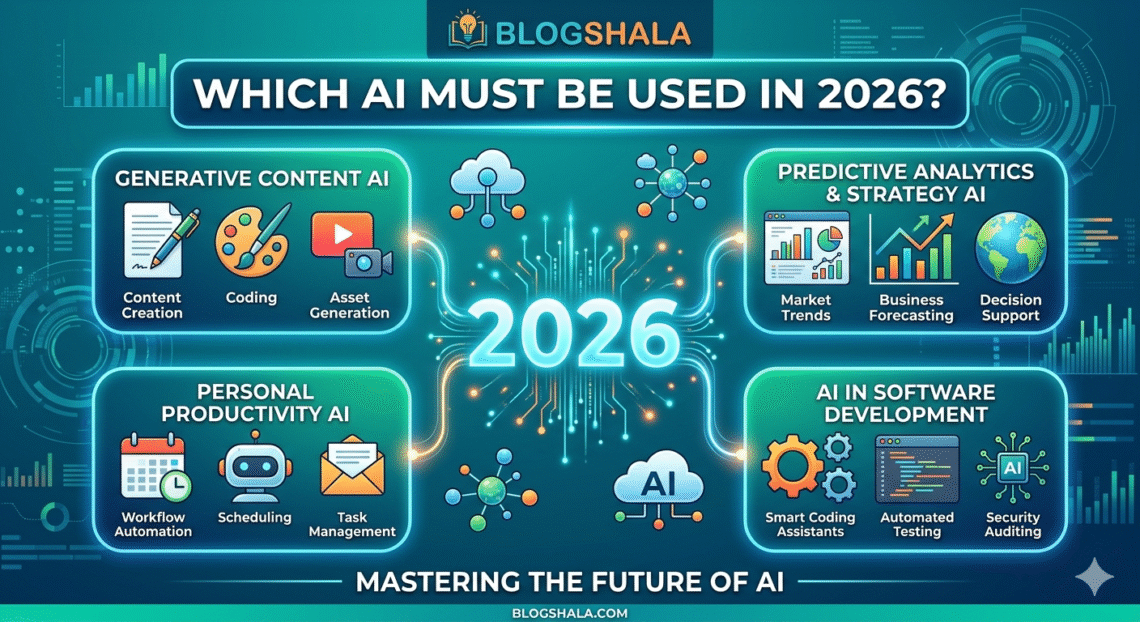
“Top AI Tools Every Student Should Use in 2026”
AI tools are now core academic infrastructure, improving efficiency in writing, research, coding, and organization. Students who integrate these tools into their workflow gain measurable advantages in speed and output quality.
1. ChatGPT
Use case: General-purpose assistant
- Draft essays, summaries, and notes
- Explain complex concepts step-by-step
- Generate practice questions and study plans
2. Claude AI
Use case: Long-form analysis
- Summarize PDFs and research papers
- Extract key insights from dense material
- Handle large context inputs effectively
3. Grammarly
Use case: Writing enhancement
- Grammar and spelling correction
- Tone and clarity optimization
- Plagiarism detection
4. Notion AI
Use case: Organization and planning
- Create structured notes automatically
- Manage tasks and study schedules
- Centralize academic content
5. Perplexity AI
Use case: Research
- Provides answers with citations
- Speeds up information retrieval
- Improves fact-checking accuracy
6. Canva
Use case: Presentations and design
- Create slides, posters, and infographics
- Use templates for rapid design
- Enhance visual communication
7. GitHub Copilot
Use case: Programming
- Auto-complete code
- Suggest logic and functions
- Accelerate development workflow
8. Duolingo
Use case: Language learning
- AI-driven interactive lessons
- Gamified progress tracking
- Improve communication skills
9. QuillBot
Use case: Paraphrasing and rewriting
- Rewrites sentences for clarity
- Helps avoid plagiarism
- Improves academic writing quality
10. Otter.ai
Use case: Lecture notes
- Converts speech to text in real time
- Records lectures and meetings
- Generates searchable notes
11. Tome AI
Use case: Smart presentations
- Auto-generates slides from prompts
- Creates structured storytelling decks
- Saves time on PPT creation
12. Midjourney
Use case: Creative projects
- Generates high-quality images
- Useful for design assignments
- Enhances visual storytelling
13. DALL·E
Use case: Visual content creation
- Create custom images from text
- Useful for presentations and projects
- Supports creative experimentation
14. Khanmigo
Use case: Personalized learning
- Acts as a virtual tutor
- Explains concepts interactively
- Helps with problem-solving
15. Speechify
Use case: Audio learning
- Converts text into audio
- Helps in multitasking
- Improves accessibility
16. Runway ML
Use case: Video projects
- AI-powered video editing
- Background removal and effects
- Useful for media assignments
Conclusion
Effective use of AI in 2026 requires tool integration, not reliance on a single platform. Combining research, drafting, editing, and organization tools yields higher productivity and better academic outcomes.
