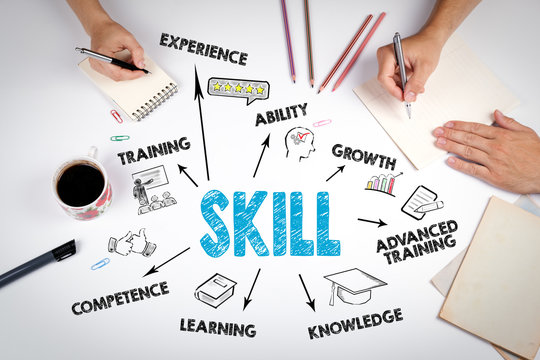
Skills are the abilities that help us do things effectively—whether it’s speaking confidently, solving problems, using technology, or managing our time. They shape how we learn, work, and interact with others. In today’s fast-changing world, skills matter more than ever because they prepare us for real-life challenges, improve our confidence, and open doors to better opportunities.
Types of Skills
- Hard Skills (Technical skills)
- Soft Skills (Personal Skills)
Hard Skills
Hard skills are specific, teachable abilities that you can learn, measure, and prove.
They are usually gained through school, training, courses, or hands-on practice.
These skills help you perform technical tasks or job-related work.
Key Features of Hard Skills
- Learnable – You gain them through study or training.
- Measurable – You can test or evaluate them.
- Certifiable – You can show proof through certificates, exams, or portfolios.
- Job-Specific – Different careers require different hard skills.
Examples of Hard Skills
- Computer & Technical Skills
- Coding (Python, Java)
- Microsoft Excel
- Web development
- Data analysis
- Professional Skills
- Accounting
- Graphic design
- Video editing
- Digital marketing
- Mechanical & Practical Skills
- Driving
- Machine operation
- Electrical wiring
- Carpentry
- Academic Skills
- Mathematics
- Research
- Laboratory techniques
Soft Skills
Soft skills are personal qualities and behaviors that help you interact well with others and handle situations effectively.
They are not technical or job-specific, but they are essential for success in studies, work, and daily life.
Soft skills show how you work, not just what you know.
Key Features of Soft Skills
- Not easily measurable – You can’t take a simple test to prove them.
- Related to personality and behavior – How you talk, think, and act.
- Useful in every field – No matter the job, soft skills always matter.
- Built through practice and experience – Observation, interaction, and self-improvement help you grow them.
Example of Soft Skills
- Communication
- Speaking clearly
- Listening actively
- Writing effectively
- Teamwork
- Working well with others
- Supporting and cooperating in groups
- Problem-Solving
- Finding solutions
- Thinking logically
- Staying calm during challenges
- Time Management
- Prioritizing tasks
- Meeting deadlines
- Leadership
- Guiding others
- Taking responsibility
- Making decisions
- Adaptability
- Adjusting to changes
- Learning new things quickly
- Emotional Intelligence
- Understanding feelings
- Managing stress
- Handling conflicts peacefully
Skills improve employability
Employers hire candidates who can do the work, not just those who have degrees.
Skills show:
- You can perform tasks effectively
- You are job-ready
- You can contribute from day one
Skills help you stand out
Thousands of students graduate every year with similar marks.
Your skills—communication, problem-solving, digital tools—make you different and memorable.
Skills build confidence
When you know how to do something well, you feel confident.
- Confidence improves performance
- Helps in interviews, presentations, and team activities
Skills prepare you for real-world challenges
Life and work are full of unexpected situations.
Skills such as:
- Adaptability
- Decision-making
- Critical thinking
help you handle them easily.
Skills increase productivity
Good skills allow you to:
- Work smarter, not harder
- Save time
- Complete tasks more efficiently
Skills open more opportunities
With better skills, you can:
- Get internships
- Earn scholarships
- Explore new fields
- Start your own projects or business
Skills support personal development
Skills not only help in jobs but also in life:
- Communication improves relationships
- Financial skills help manage money wisely
- Time management reduces stress
Skills match future job trends
The world is changing fast due to AI and technology.
Skills ensure you remain relevant in the future job market.